

Child Development
Why outdoor play matters so much in the early years
Written by Margaret, Owner & Director at The House That Jack Built
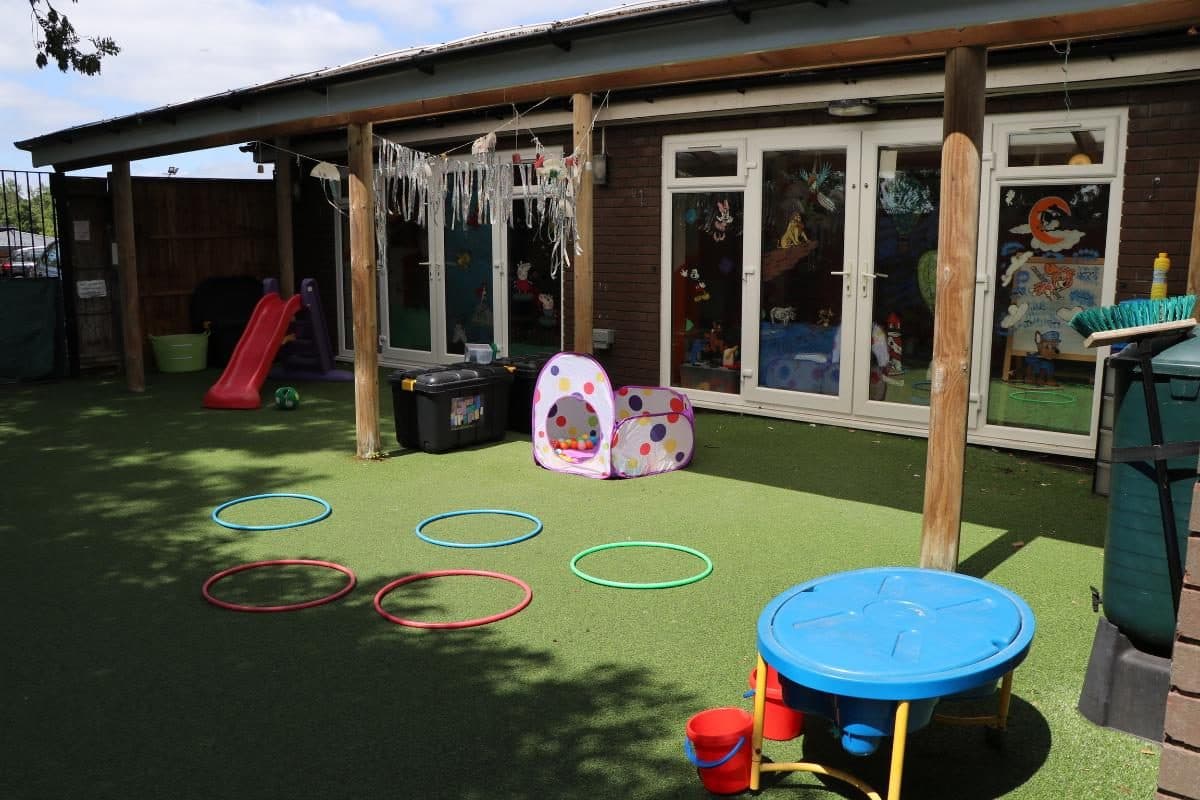
Rain or shine, one of the things I feel most strongly about after more than two decades running nurseries is this: children need to be outside. Not as a reward, not as a break from the real learning, but as a central part of how they grow and make sense of the world around them.
When I opened The House That Jack Built in 2000, with Jack himself just nine months old, outdoor play was already part of our philosophy. Over the years, watching hundreds of children across our settings in Marlow, Hazlemere and High Wycombe, my conviction has only grown.
What we actually see when children play outside
There is something that happens when a child steps out of a building and into open air. I see it regularly with our youngest ones, even babies, when we take them out into the garden. Their faces change. They look up. They reach out. The world is suddenly much bigger and much more interesting.
For toddlers and pre-schoolers, the shift is even more visible. Children who have been sitting still for twenty minutes will run, spin, crouch down to look at a worm, and then look up to tell someone about it. That movement is not restlessness. It is how they are wired to explore.
We operate a free-flow system across all our settings, which means children can move between indoor and outdoor spaces throughout the day. What this gives us, practically, is the chance to observe what children choose when they have genuine freedom. And they choose outside constantly.
The development happening in all that mud and movement
Outdoor play supports children across almost every area of development, often in ways that are hard to replicate indoors.
Physical development is the obvious one. Running, climbing, balancing, digging and carrying all build strength, coordination and spatial awareness. These are not trivial skills. They feed directly into a child's confidence in their own body, which matters enormously as they grow.
Language and communication develop outdoors too, often in ways that surprise parents. When a child is pointing at a spider's web, or describing the texture of bark, or trying to explain to a friend how to make a channel for water to flow through, they are doing some of the richest language work of their day.
Problem-solving and resilience are things we talk about a lot in early years, and outdoor play is where we see them most clearly tested. Will that stick be long enough to reach? What happens if we add more water to the mud? Why did that pile of leaves fall over? Children tolerate uncertainty and work through it outside in a way that structured indoor activities rarely demand.
Emotional regulation is perhaps the one parents mention least, but that we notice most. Children who spend time outdoors, particularly in natural settings, tend to be calmer. There is something about open space, natural light and physical movement that settles children who are finding the day hard.
Getting outside whatever the weather
We ask families to send children in with weather-appropriate clothing, including wellies and waterproofs, and that is not a small request. We know it creates washing. But it reflects something we genuinely believe: outdoor time should not stop when it is cold or drizzly.
At our Flackwell Heath setting, which sits within the grounds of Amersham and Wycombe College, we have fields and woodland on our doorstep. Nature trails and outdoor exploration are a regular part of life there. At Hazlemere, we have two on-site play areas and make use of a nearby park. At Marlow Bottom, our secure outdoor grounds give children daily access to open air whatever the season.
Across all three sites, we also have growing areas where children help tend and harvest produce. Watching a three-year-old dig up a carrot they have been tending for weeks is one of those moments that reminds me why this work matters.
Outings into the wider world
Beyond the nursery grounds, we take regular walks and local outings as part of our routine. These are risk assessed in advance, staffed above Ofsted ratios, and always include paediatric first aid trained staff. For children growing up in and around Marlow, Hazlemere and High Wycombe, learning to navigate real pavements, roads and local spaces is a genuine part of their early education. We see children's confidence grow enormously through these small adventures.
A note for parents thinking about the balance
Parents sometimes ask us whether outdoor time comes at the expense of more structured learning. In my experience, it is the opposite. Children who spend meaningful time outside come back to indoor activities more focused, more settled and more ready to engage. The two support each other.
If you would like to see how we approach outdoor play in practice, the best way is to come and see for yourself. You are welcome to book a show-around at any of our settings, where you can see the outdoor spaces and ask us anything.
Come and see us for yourself
Book a relaxed tour of The House That Jack Built and meet our team.
Book a tourOther guides you might like
Child Development
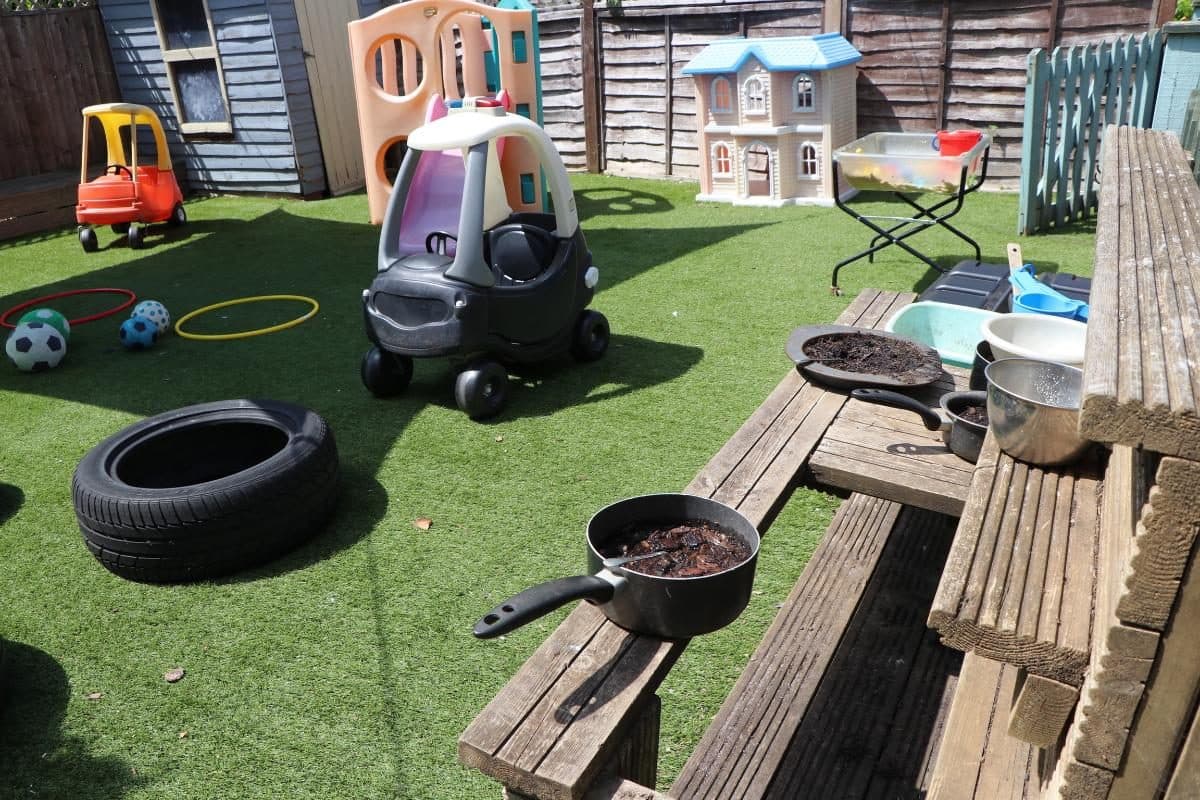
Why outdoor play matters so much in the early years
Outdoor play is far more than fresh air and running around. Margaret, Owner and Director at The House That Jack Built, shares what she sees every day and why getting outside is one of the most valuable things we offer young children.
Child Development
Growing Up with Two Languages: What We See in Our Nursery Every Day
Bilingual children sometimes take a different path through early language development, and that can worry parents. Here is what we actually observe day to day, and how we support families navigating two languages.
Child Development
Why Mixed-Age Learning Works: What We See Every Day at Our Nurseries
Mixed-age groups are something we have always believed in at The House That Jack Built. Here is what we genuinely observe when younger and older children learn alongside one another.
Frequently asked questions
How much time do children spend outside at The House That Jack Built?
We use a free-flow system, so children can move between indoor and outdoor spaces throughout the day rather than having set outdoor slots. In practice, children who want to be outside can be outside for much of the day. We also do regular local outings and walks as part of the routine across all three of our settings.
What should my child wear for outdoor play at nursery?
We ask families to send children with weather-appropriate clothing, including wellies and waterproofs, so outdoor time does not have to stop when the weather is less than perfect. Spare clothes are always a good idea too. All clothing and footwear should be clearly labelled so nothing goes missing.
Is outdoor play safe for babies and very young children?
Yes, and we feel it is really important even for our youngest children. Fresh air, natural light and gentle outdoor sensory experience are genuinely beneficial from a very early age. Our outdoor spaces are secure, and our staff-to-child ratios on outings always exceed Ofsted requirements, with paediatric first aid trained staff present at all times.
Can I come and see the outdoor spaces before my child starts?
Absolutely. The best way to get a feel for any of our settings in Marlow, Hazlemere or High Wycombe is to visit in person. You can book a show-around and we will walk you through the outdoor areas, growing spaces and everything else. We also offer Stay and Play sessions if you would prefer a more relaxed introduction.